

If you’re wondering how to promote a business online, you’re not alone. There are dozens of channels to choose from—Google, social media, SEO, websites, WhatsApp, online ads, videos and more. The difficult part isn’t finding another marketing tactic. It’s knowing what to do first.
The good news is that you don’t need to be everywhere. A better approach is to make your business easy to find, give people a reason to trust you, and create a simple path from interest to enquiry.
In this guide, you’ll discover 15 practical ways to promote a business online, plus a simple 30-day plan to help you decide where to start.
If you’re learning how to promote a business online, the best place to start is with the channels where your customers are already searching.
What Is the Best Way to Promote a Business Online?
There isn’t one marketing channel that works for every business. A local restaurant, coaching institute, online store and professional service business may need completely different strategies.
Instead of asking, “Which platform should I use?”, start with a better question: Where are my customers looking for a solution, and what would make them choose my business?
A strong online marketing system usually follows this path: Get discovered → Build trust → Create interest → Make contact easy → Convert the customer.
1. Make Your Business Easy to Find on Google
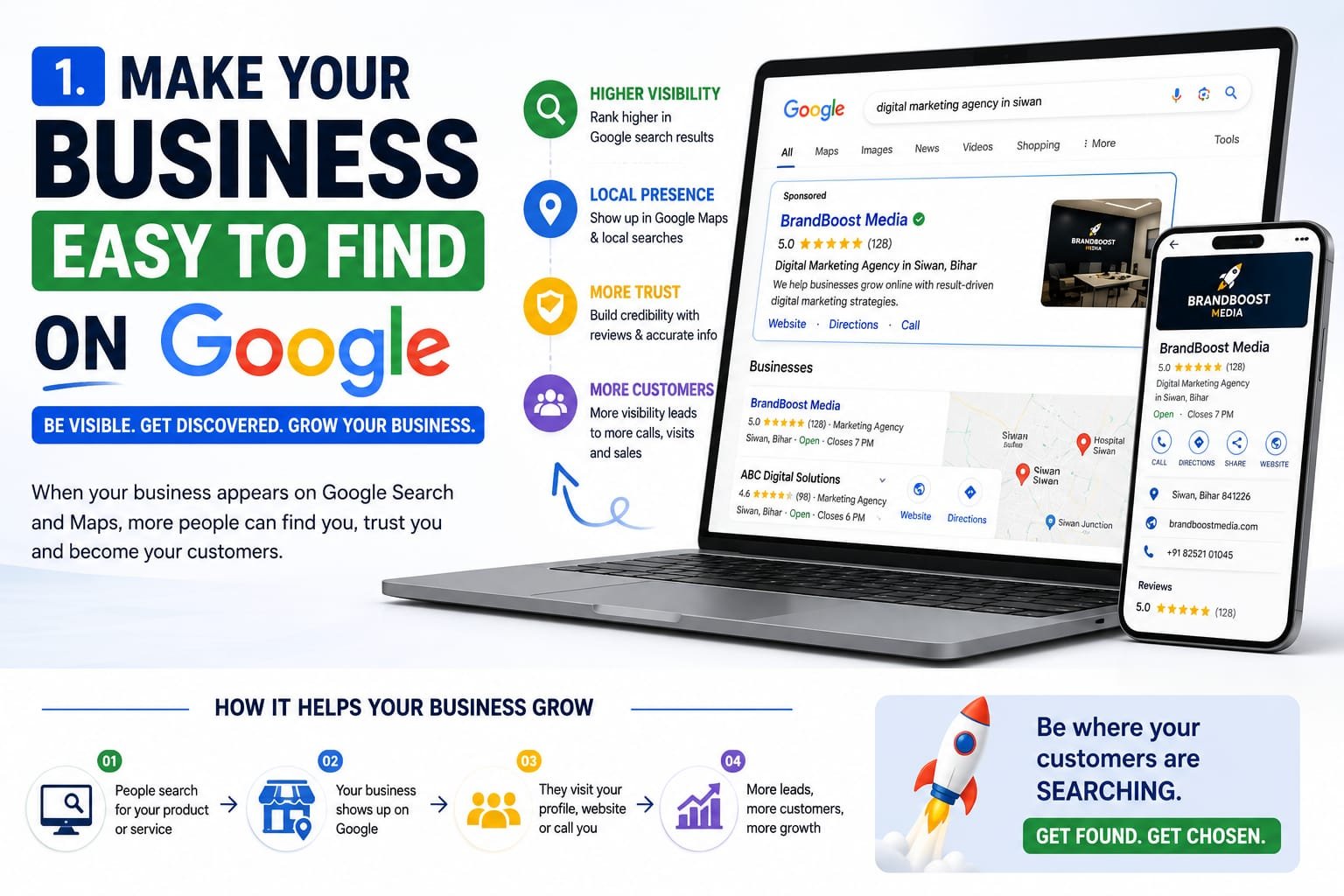
One of the simplest ways to promote a business online is to make sure potential customers can actually find it when they’re searching.
If you run a local business, start with your Google Business Profile. Keep your business name, category, location, phone number, hours, website, services and photos accurate and up to date.
Think about the searches your customers might make: digital marketing agency near me, best coaching institute in Siwan, salon near me, or website designer in Siwan.
Your goal isn’t simply to appear on Google. It’s to give the person enough useful information to feel comfortable taking the next step.
2. Build a Website That Converts
Your website shouldn’t only tell people who you are. It should help them decide what to do next.
When someone lands on your website, they should quickly understand what you offer, who you help, why they should trust you, and how they can contact you.
A good-looking website gets attention. A well-planned website turns that attention into action.
3. Use SEO to Capture Search Demand
Start by understanding what your potential customers actually search for.
Before creating content, you can use the Keyword Finder on our website to discover the search terms your potential customers are actually looking for.
Search engine optimization helps your business appear when people search for information, products or services related to what you offer.
Start by understanding what your potential customers actually search for. A web design company, for example, could target questions such as how much does a business website cost? or what should a small business website include?
Useful SEO work includes keyword research, helpful content, clear page titles and headings, internal linking, mobile-friendly pages, and fast and usable pages.
Don’t write for a keyword. Write to solve the problem behind the keyword.
Understanding how to promote a business online starts with understanding what your customers search for.
4. Create Content That Answers Real Customer Questions
People don’t always search for a company when they’re ready to buy. Often, they start with a question.
A coaching institute could answer how can I improve my English speaking skills? A digital marketing agency could answer how to promote a business online? A salon could publish advice about choosing the right haircut.
These questions can become blog posts, videos, social media posts and FAQs.
Ask your existing customers what they were confused about before buying from you. Those questions are often better content ideas than anything you can invent from a keyword tool.
5. Use Social Media Strategically
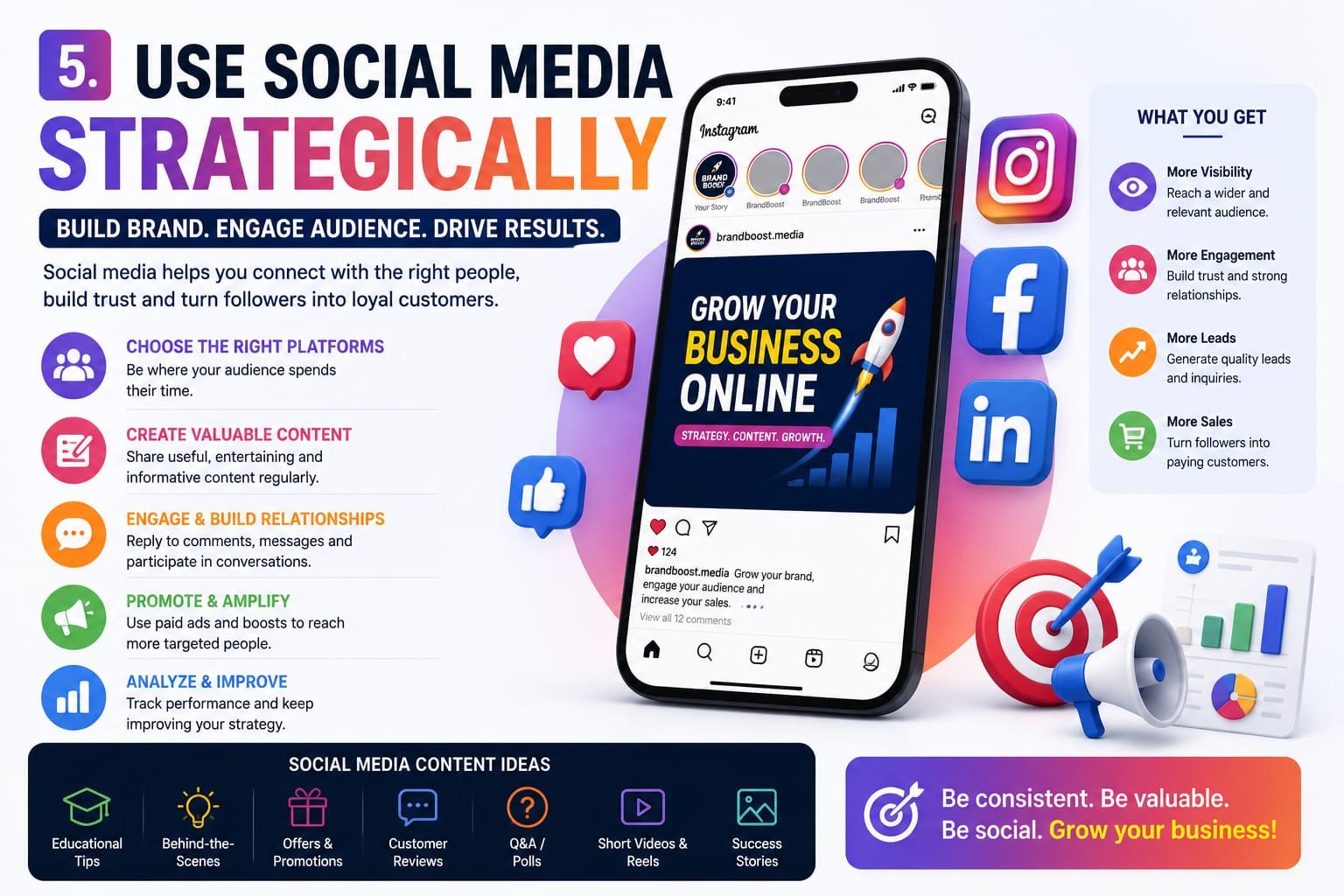
Social media can help people discover your business, but posting every day isn’t a strategy by itself.
Think about what your audience would actually stop scrolling to see: quick tips, product demonstrations, customer stories, before-and-after results, frequently asked questions, behind-the-scenes content, and short educational videos.
Create content that gives people a reason to remember your business, not just a reason to scroll past it.
When deciding how to promote a business online, don’t choose a platform simply because it is popular.
6. Turn Customer Reviews Into Trust
Before contacting a business, people often want to know whether other customers had a good experience.
That’s why genuine reviews can be such an important part of online promotion.
Ask satisfied customers for honest feedback and make the process simple. Then showcase genuine reviews where potential customers can see them—such as Google, your website and relevant service pages.
Don’t manufacture reviews. Pay attention to what real customers repeatedly mention, because those details can become valuable marketing messages.
7. Use WhatsApp to Turn Interest Into Enquiries
Getting someone interested is only half the job. You also need to make it easy for them to contact you.
For many businesses, WhatsApp can be a simple bridge between marketing and sales.
A basic customer journey could look like: Social media post → Website → Offer page → WhatsApp → Enquiry.
If WhatsApp is an important part of your sales process, don’t hide the button at the bottom of the website. Put it where a visitor naturally needs it.
8. Use Short-Form Video
Short-form videos can introduce your business to people who may never have searched for you directly.
Try videos that answer one small question, demonstrate something useful or show a real customer experience.
A video with 100,000 views and zero enquiries may be less valuable to a business than a video with 8,000 views that generates 20 genuine leads.
For business marketing, attention matters—but qualified attention matters more.
9. Run Google Ads for High-Intent Searches
SEO can take time. Google Ads can help you reach people who are already searching for a product or service.
For example, someone searching for website designer near me may already have a business problem they want to solve.
Don’t automatically send every paid visitor to your homepage. If your advertisement promotes a specific service, send the visitor to a page that explains that service and gives them one clear next step.
Ad → Relevant landing page → Clear offer → Enquiry.
When deciding how to promote a business online, paid advertising can be useful when people are already searching for your service.
10. Use Facebook and Instagram Ads
Meta advertising can be useful when you want to reach a specific audience, promote an offer or generate leads.
For example, a coaching institute could advertise a free demo class to people in its target location.
Start by testing rather than guessing. Compare different headlines, videos, offers, audiences and landing pages, then put more budget behind what actually produces useful results.
11. Create Landing Pages for Specific Offers
A homepage introduces your business. A landing page can focus on one specific goal.
Imagine you’re offering a Free Website Consultation. Instead of sending someone to a homepage with six different services, create a page focused entirely on that consultation.
A useful landing page can include a clear headline, a specific offer, key benefits, testimonials or proof, frequently asked questions, and one primary call to action.
One landing page should have one main job.
A focused landing page can make how to promote a business online more effective by giving visitors one clear action to take.
12. Partner With Businesses That Share Your Audience
You don’t always have to build an audience from zero.
Look for businesses that serve a similar audience without directly competing with you.
Examples include Salon + Makeup Artist, Coaching Institute + Career Counselor, Restaurant + Local Food Creator, and Real Estate Agent + Interior Designer.
You can collaborate through workshops, referral partnerships, joint content, events or special offers.
13. Follow Up With Interested Customers
Not everyone who visits your website will buy immediately.
Someone might read your article today, compare several businesses and contact you two weeks later.
Depending on your business, you can stay connected through email, WhatsApp, remarketing or useful follow-up content.
The goal isn’t to repeatedly ask if someone is ready to buy. Give people useful reasons to remember your business when they’re ready.
14. Track Leads, Not Just Traffic
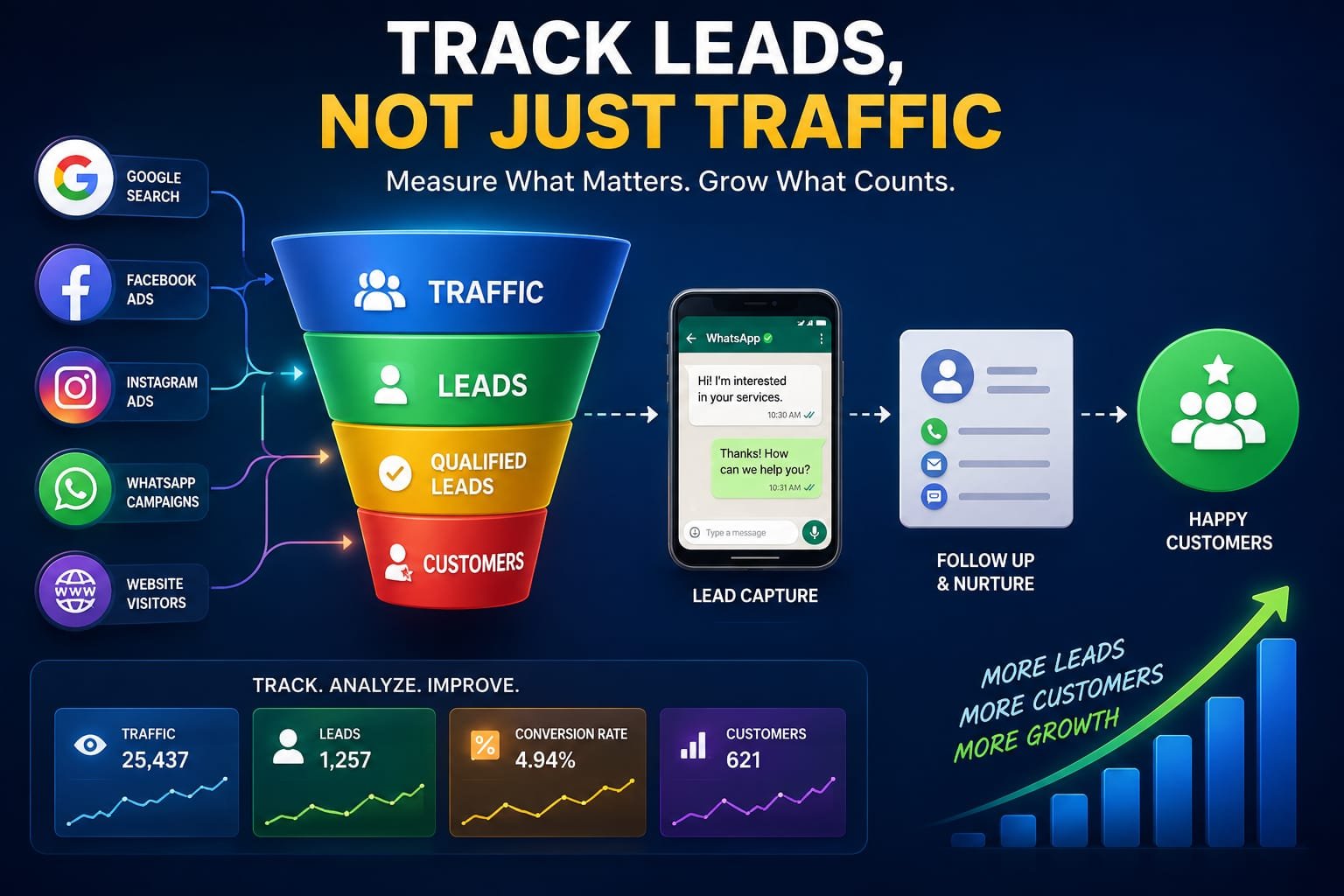
This is where online marketing becomes much more useful.
It’s easy to celebrate followers, views and website visitors. But a business ultimately needs customers.
Track metrics such as leads, calls, WhatsApp enquiries, bookings, sales, cost per lead, and conversion rate.
Don’t optimize only for attention. Optimize for results.
15. Improve What Is Already Working
You don’t always need another marketing channel.
Sometimes the smartest move is to improve the channel that’s already producing results.
If SEO brings enquiries, create more useful content around the topics your customers care about. If Google Ads works, improve the landing page and test your offers. If WhatsApp converts well, make the enquiry process faster.
Growth often comes from doing more of what works—not constantly starting something new.
How to Promote a Business Online With a Small Budget
You don’t need a huge advertising budget to get started.
If your budget is limited, build the basics first: improve your Google Business Profile, make your website clear and mobile-friendly, research customer searches, create useful content, collect genuine reviews, add an easy call or WhatsApp option, and test paid advertising only after your offer and conversion path are ready.
A small budget with a clear strategy can be more useful than a large budget spread across several channels without proper tracking.
The key is to choose the right channels when deciding how to promote a business online, rather than trying everything at once.
A Simple 30-Day Online Marketing Plan
Week 1 — Build Your Foundation: Review your website, Google Business Profile, contact information, services and main offer.
Week 2 — Find and Create Demand: Research customer search terms and questions. Turn useful topics into blog posts, short videos or social content.
Week 3 — Improve Conversion: Add clear calls to action, WhatsApp or enquiry options, testimonials and a focused landing page.
Week 4 — Test and Measure: Review where traffic and enquiries came from. Compare leads and conversions instead of looking only at clicks or views.
This gives you a simple starting point for how to promote a business online without wasting your budget.
Frequently Asked Questions
How can I promote my business online for free?
Start with Google Business Profile, SEO, useful content, social media, genuine reviews and direct communication channels such as WhatsApp.
What is the best way to promote a small business online?
There isn’t one universal method. Start with the channels your customers actually use.
How do I get more customers online?
Make your business easy to discover, build trust, present a clear offer and make contacting you simple.
Is SEO better than paid advertising?
Neither is automatically better. SEO can build organic visibility over time, while paid advertising can provide faster access to targeted traffic.
Can I promote my business online without a website?
Yes, but a website gives you more control over content, search visibility and the customer journey.
How much does it cost to promote a business online?
There is no universal budget. Start with channels you can measure and scale what produces profitable customers.
Final Thoughts
Promoting a business online isn’t about being everywhere.
Once you know how to promote a business online, focus on consistently improving the channels that bring real enquiries and customers.
It’s about being visible where your customers are looking, giving them useful information, building trust and making the next step easy.
Start small. Build your foundation, create useful content, improve your conversion path and measure what actually brings customers.
The goal isn’t simply more traffic. It’s turning attention into trust, trust into enquiries and enquiries into customers.
Ready to Promote Your Business Online?
If you’re not sure which digital marketing channel deserves your time or budget, BrandBoost Media can help you identify the opportunities worth prioritizing.
From websites and SEO to paid advertising and lead generation, the goal is simple: build a marketing system that supports real business growth.
[…] can also read our guide on how to promote a business online for more practical […]